
There are countries you visit for scenery. Others for food, history, or adventure. But Bhutan feels different from the moment you arrive. It feels like stepping into another realm entirely — a mystical Himalayan kingdom where myths are still alive, monasteries cling impossibly to cliffs, and spirituality is woven into everyday life.
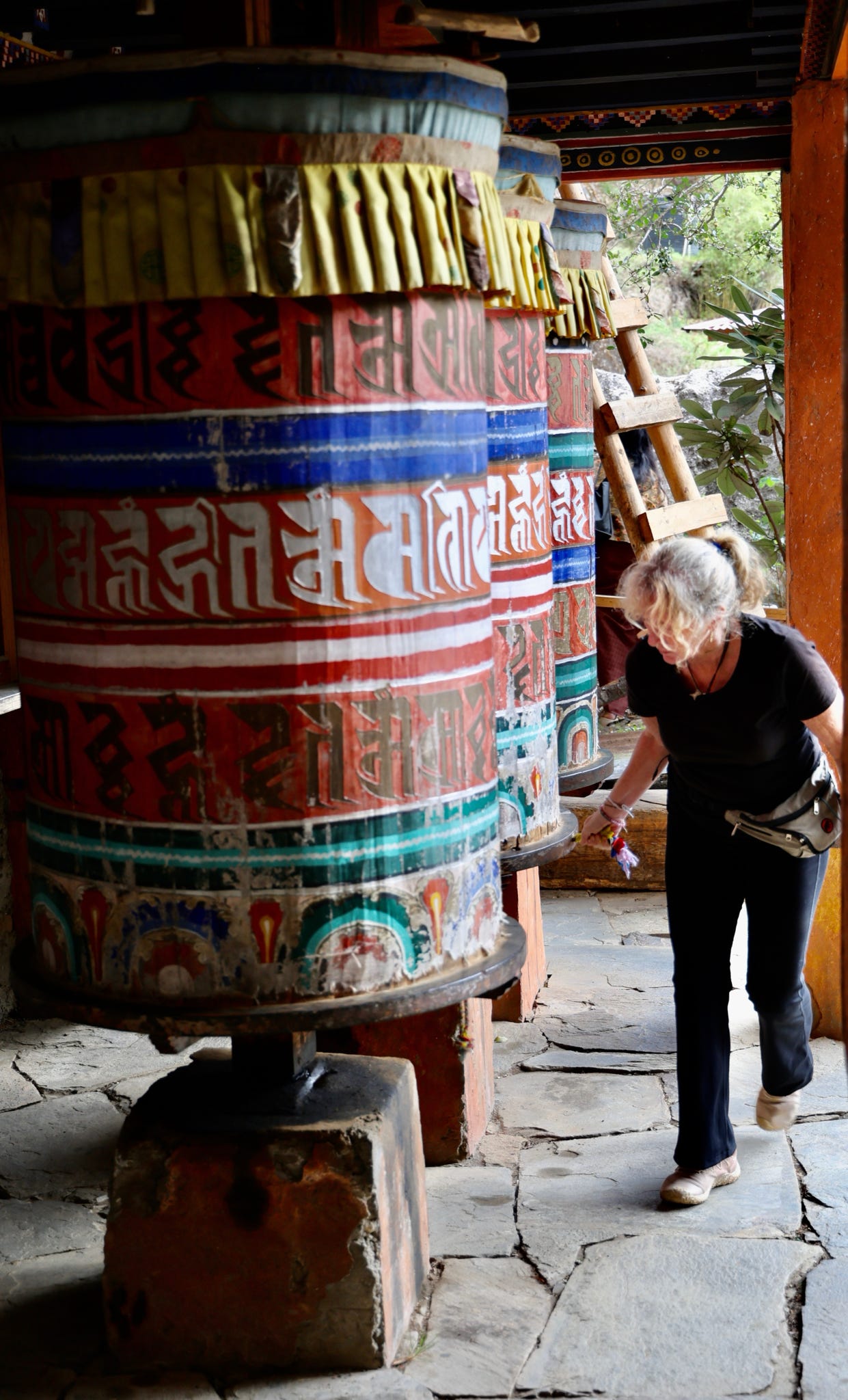
Known as the Land of the Thunder Dragon, Bhutan is unlike anywhere else in the world that I have ever been. It is unusual just in the way it is run – the King makes sure the people, the environment, the animals and the culture get looked after. Now where else do all of those things happen?! It’s refreshingly not about money or consumerism.
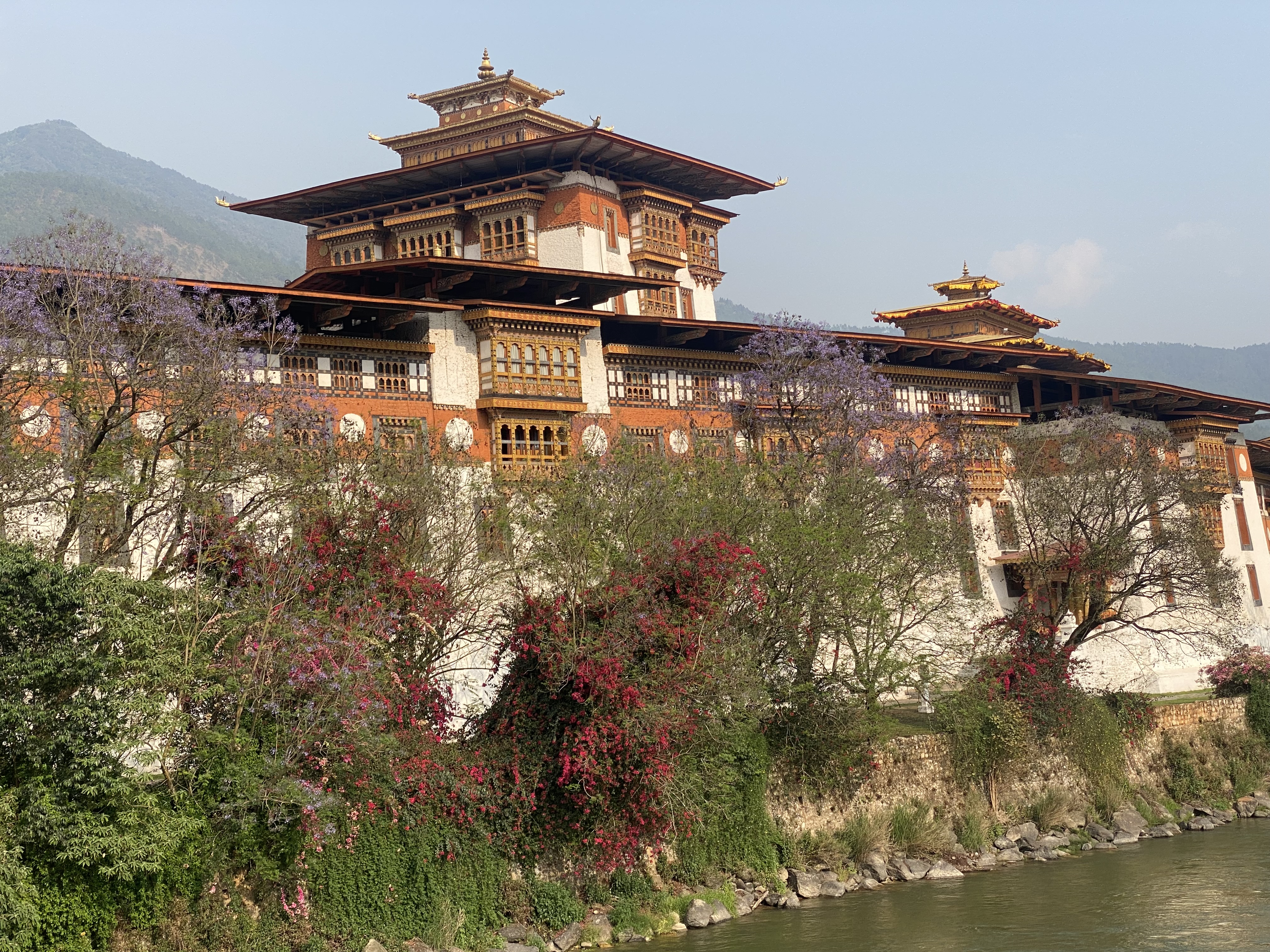
High in the mountains are ancient temples and monasteries reached by winding trails through forests of pine and rhododendron. Inside, walls are covered with vivid paintings depicting fierce protector deities, divine madmen, flying gurus, and fantastical tales that seem to blur the line between myth and reality. There are so many Gods, deities, and each of them has several manifestations just to make it more mind-boggling – it will certainly put your brain into a spin. Not to mention the stories that go with them….
The stories you hear in Bhutan are extraordinary.
There are tales of saints flying through the mountains, of gurus taming demons, of sacred lakes with miraculous powers. One story tells of someone falling into a freezing lake holding a burning butter lamp — only to emerge with the flame still alight. In Bhutan, these stories are not treated as fantasy or metaphor. They are simply part of the fabric of the culture, passed down through generations with quiet certainty. They’re all true you know!
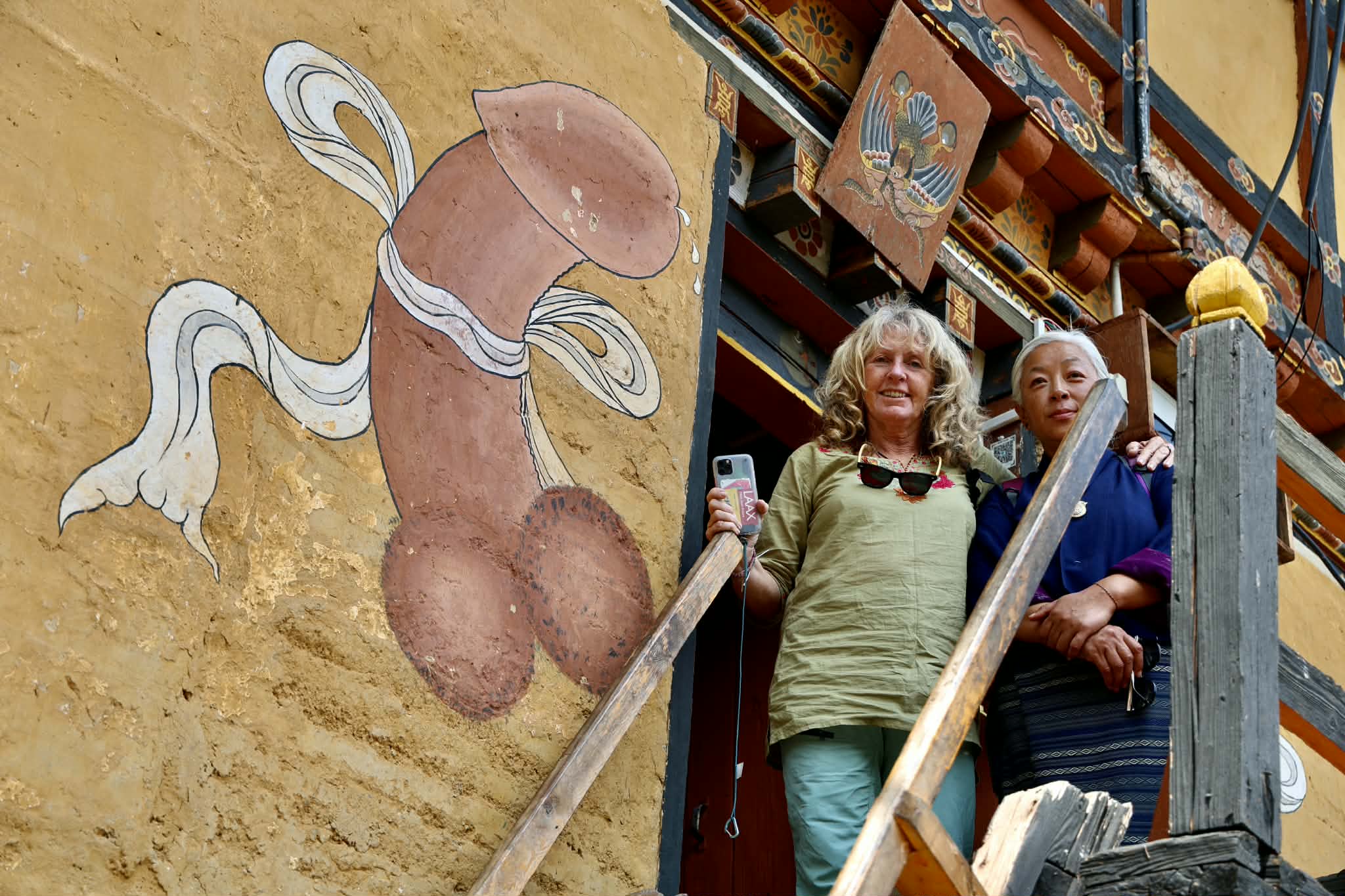
And then there are the phalluses.
Yes — painted on houses, hanging from rooftops, carved into wooden signs – and the souvenir shops stock all manner of them, painted, crocheted, carved, with teeth, with arms…. At first it’s surprising, even hilarious. But these symbols trace back to the legendary “Divine Madman,” Drukpa Kunley, a wandering Buddhist lama who used humour, shock, and outrageous behaviour to teach spiritual lessons and challenge hypocrisy. In Bhutan, spirituality is not stiff or solemn. It’s earthy, playful, mysterious, and deeply human. You’ll get used to all the dicks, and you might even find yourself doing your Christmas shopping (what else do you get the person who has everything?)
Yet Bhutan isn’t trapped in the past.
It is remarkably well run. The country has a king who is deeply loved by the people, a small population, and a national philosophy centred around wellbeing rather than endless economic growth. Buddhism and mindfulness influence daily life. The environment is fiercely protected. Forests blanket the mountainsides. Plastic pollution is minimal. Traditional culture is preserved with pride, not as a tourist performance, but as a living identity.
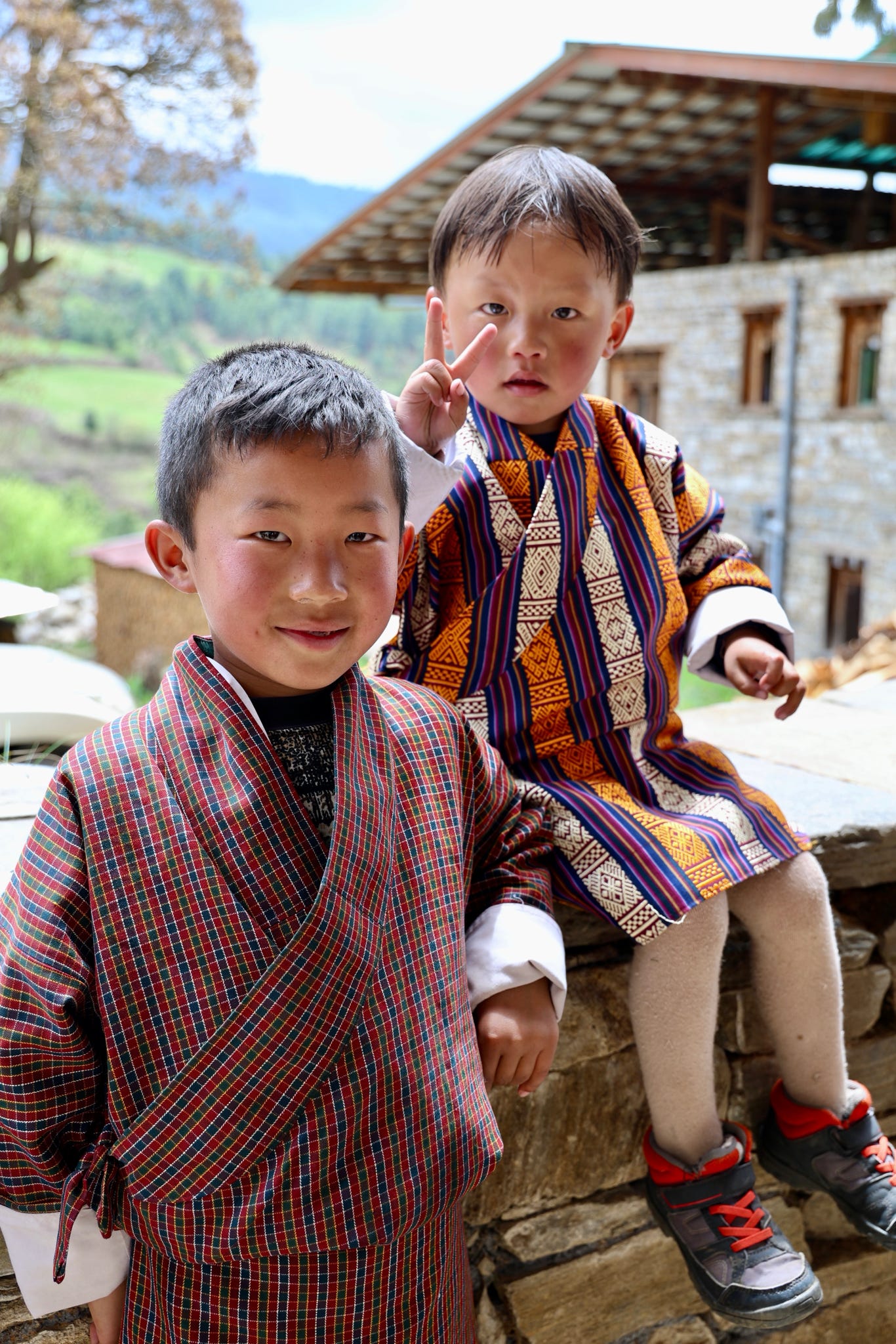
Most people still wear traditional dress — the gho for men and kira for women — and ancient customs remain part of modern life. It feels peaceful in a way that is increasingly rare in the world. Don’t come here looking for parties or lively bars. We’re here to chill out and be present, ok? And the internet ain’t that great, so you’ll get a digital holiday too.
And after days of hearing these incredible stories, visiting sacred temples, spinning prayer wheels, crossing high mountain passes fluttering with prayer flags, and wondering what is myth and what might somehow be true… you arrive at Tiger’s Nest.
Paro Taktsang — better known as Tiger’s Nest Monastery — is the place that stays with you long after you leave Bhutan.
Perched impossibly on the side of a sheer cliff face, thousands of metres above the valley floor (around 3120m!), it looks less like a building and more like a vision. Even standing there staring at it, it’s hard to comprehend how anyone could possibly have built it. How did people carry timber, stone, tools, and supplies up those mountains? How did they even reach that ledge?
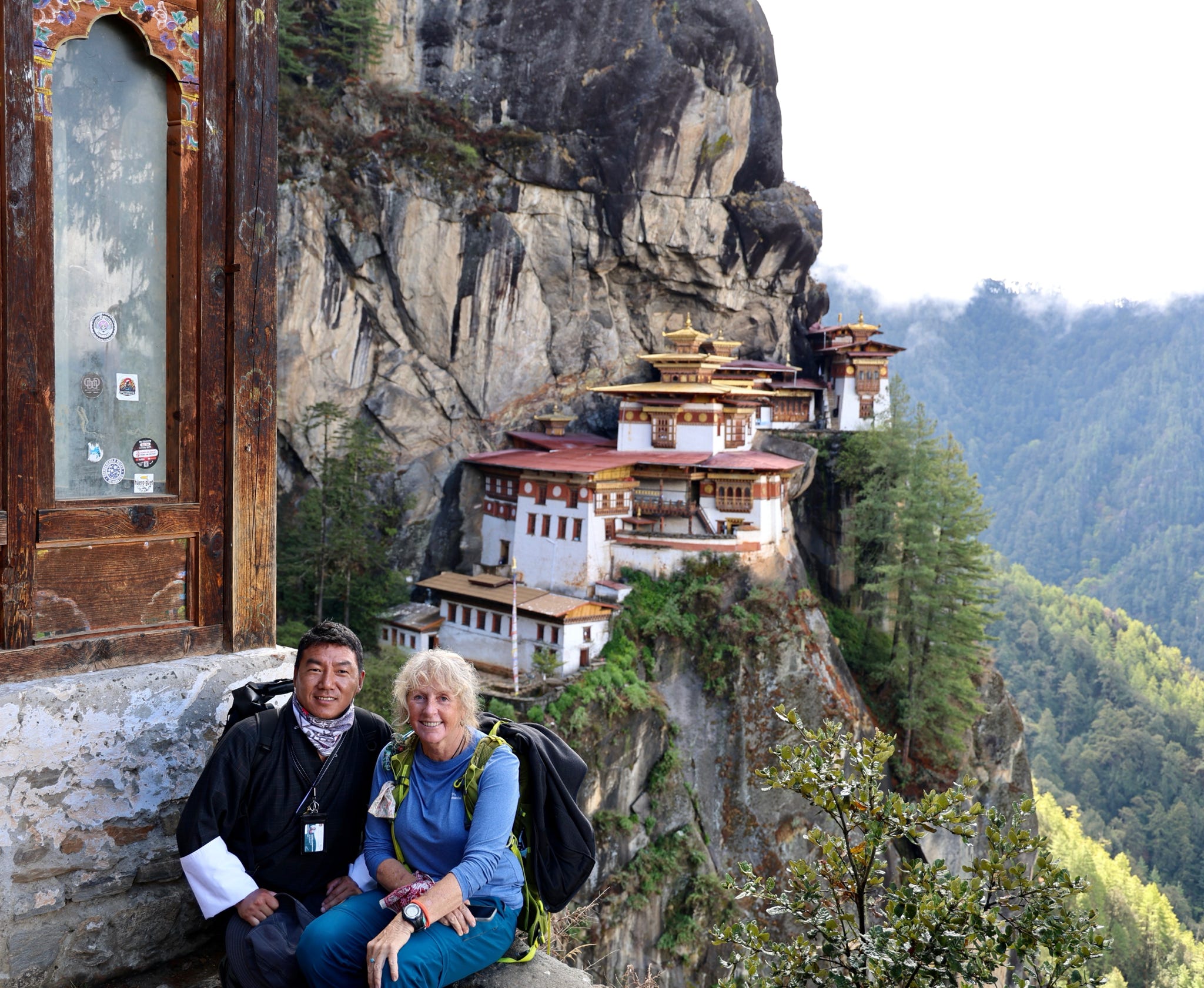
According to legend, Guru Rinpoche — the great Buddhist master who brought Buddhism to Bhutan — flew there on the back of a tigress to meditate in a cave.
And after hiking up to Tiger’s Nest yourself, lungs burning and legs aching as the monastery slowly emerges through the mist and pine trees, you find yourself looking at it and thinking:
How the hell did anyone ever get up here in the first place? And then I decided…well… riding on the back of a tigress really does seem like the only possible way anyone could have gotten there.
And suddenly, all the fantastical stories you’ve heard throughout Bhutan don’t seem quite so impossible after all.
PS. A great read for before, during of after this trip is Beyond the Sky and the Earth by Jamie Zeppa – it will give you a great insight into this unusual little hermit Kingdom.


Wonderful post and outstanding photos. Ive been to Nepal many times, recently returned from a personal pilgrimage to Lumbini for Buddha’s birthplace. I often regret never visited Tibet and Bhutan from Kathmandu but …….. maybe one day.
Thank you! I hope you make it to Bhutan one day, it’s just one hour from Kathmandu. You only need a week there to get a feel for it, although we were there 10 days