
This week I was sitting on a beach on the sophisticated and swanky Isle of Capri in Italy, watching mostly young women pose like models for selfies, then checking the pictures, deleting, and retaking to get the perfect shot. I found it quite bewildering, all this “me me me” behaviour. I asked myself what social media must be doing to young girls’ self-esteem. I wondered what the point of travel was these days. The rise of social media has profoundly transformed travel and exploration, giving birth to a phenomenon known as “ego tourism.” This term encapsulates the practice of traveling primarily to gain social media validation through photographs and posts. Ego tourism is emblematic of the “selfie generation,” where personal image and online persona often take precedence over authentic experiences. From young girls posing in picturesque Italian villages to amateur climbers risking their lives on Everest, this trend highlights a shift in how people interact with the world around them.

In the age of Instagram and TikTok, destinations have become stages for digital performances. Italian villages like Positano and Portofino, with their charming streets and vibrant facades, attract scores of young women donning stylish outfits, meticulously curated to match the aesthetic appeal of their surroundings. These visits are less about immersing oneself in the culture and more about capturing the perfect shot to share online. The visual appeal of these posts garners likes and comments, serving as a form of social currency in the digital age. This pursuit of online validation often leads to a superficial engagement with the places visited, reducing rich cultural experiences to mere backdrops for personal branding.
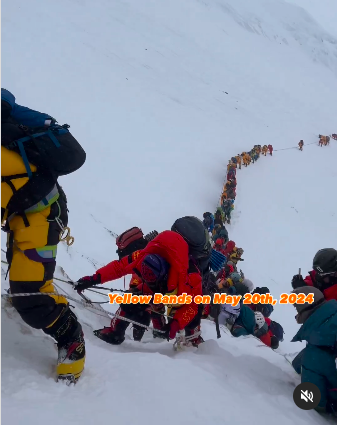
The allure of extreme destinations such as Mount Everest illustrates another dimension of ego tourism. Historically, scaling Everest was a feat reserved for seasoned climbers with years of experience. However, the mountain has seen an influx of amateur climbers, driven by the desire to boast about their conquest on social media. The infamous “Everest selfie” has become a symbol of this trend. Many of these climbers are inadequately prepared for the perilous conditions, leading to overcrowding, increased accidents, and even fatalities. The mountain, once a symbol of human endurance and exploration, is now a stage for egoistic endeavors, where the focus is on personal achievement rather than the journey itself. This news article and my observations in Italy sparked this blogpost:
Everest rope queue videos expose climber congestion, ‘ego tourism’ decried https://www.nzherald.co.nz/travel/news/everest-rope-queue-videos-expose-climber-congestion-ego-tourism-decried/TSTQSJKXDVD7RKIWPVO6NW7WQE/
This phenomenon is not merely a modern-day curiosity but also a reflection of deeper societal changes. The line from Baz Luhrmann’s “Everybody’s Free (To Wear Sunscreen)”—“The race is long, and in the end, it’s only with yourself”—captures a timeless truth often overshadowed by the relentless pursuit of social validation. The song, which offers life advice in a poetic form, reminds us that personal fulfillment and growth are not contingent on external approval. In the context of ego tourism, this line underscores the futility of comparing oneself to others based on curated online personas. True satisfaction comes from genuine experiences and personal milestones, not from the number of likes or followers.
The selfie generation’s obsession with documenting and sharing every moment has profound implications on how we perceive and value our experiences. When the primary goal of travel becomes creating content for an audience, the intrinsic value of the experience diminishes. The pressure to present an idealized version of oneself online can lead to anxiety, a sense of inadequacy, and a constant need for external validation. This contrasts sharply with the more fulfilling and enduring satisfaction derived from personal achievements and self-improvement.
Moreover, ego tourism can have detrimental effects on the destinations themselves. Popular spots often suffer from environmental degradation, cultural dilution, and infrastructural strain due to the influx of tourists more interested in their selfies than in the preservation of these places. The commercialization of these locales to cater to the selfie generation further erodes their authentic charm, creating a feedback loop where the original allure that attracted visitors in the first place is gradually lost.
In conclusion, ego tourism and the selfie generation represent a significant shift in how people engage with travel and exploration. While social media has democratized the sharing of experiences and broadened our horizons, it has also fostered a culture where personal validation is increasingly sought through online approval. The wisdom in Luhrmann’s sunscreen song serves as a poignant reminder that life’s journey is ultimately personal and inward. True fulfillment arises from within, through authentic experiences and self-reflection, rather than through the fleeting validation of social media likes. As we navigate this digital age, it is crucial to reclaim the joy of travel as a means of genuine discovery and personal growth, transcending the superficiality of ego tourism.

 Adventures of Venus
What an excellent article. I am truly sorry for these people. What they miss. How they perceive life?? Too sad.